LEGENDWhat does LEGEND mean?
Traditional story, legend, or folklore. This is a culturally meaningful story passed through tradition. It is not presented as a verified event. See the full glossary →
The Myth of Icarus
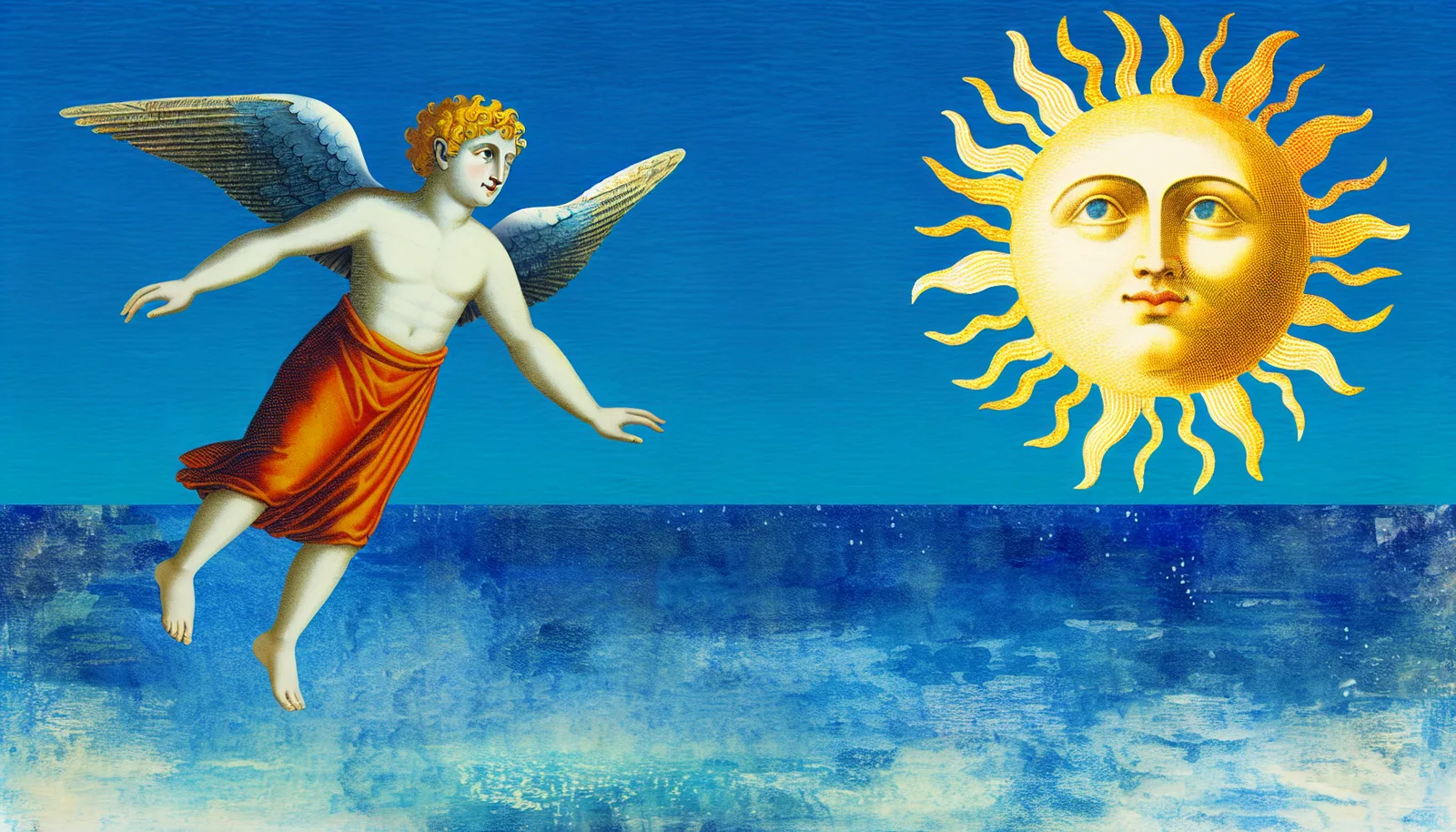
The timeless tale of Icarus, a character from Greek mythology, serves as a potent reminder of the dangers of overconfidence and ignoring warnings. As
Introduction
From the annals of Greek mythology, the tale of Icarus is a poignant reminder of the perils of overconfidence and disobedience. The story of Icarus, who dared to fly too close to the sun on wings of feathers and wax, continues to resonate in our collective consciousness. This ancient story warns us of the potential consequences of failing to heed advice and guidance.
The Tale of Icarus
Icarus was the son of the master craftsman Daedalus, who was imprisoned by King Minos of Crete within the walls of his own invention, the Labyrinth. Desperate to escape, Daedalus crafted two pairs of wings out of wax and feathers. Before their flight, Daedalus warned Icarus not to fly too high, for the heat of the sun would melt the wax, nor too low, for the sea’s dampness would clog the feathers.
Icarus, however, in his youthful folly and excitement, ignored his father’s caution. As they took flight, the boy soared into the sky, entranced by the thrill of flying. He flew higher and higher until he got too close to the sun. As his father had warned, the heat melted the wax on his wings, and Icarus fell into the sea and drowned.
Interpreting the Myth of Icarus
The myth of Icarus is more than just a cautionary tale about the dangers of hubris. It’s a parable about the human condition, our aspirations, ambitions, and the inherent risks that come with them. (source) This myth reminds us that while ambition is a driving force for progress and success, unrestrained ambition can lead to dire consequences.
In our pursuit of success and recognition, we may sometimes become Icarus, ignoring the advice of those who care about us. It is essential to remember that while ambition can take us to great heights, it can also lead to our downfall if not tempered with wisdom and caution.
The Relevance of Icarus Today
Even today, the story of Icarus continues to resonate. We see examples of the ‘Icarus syndrome’ in individuals, companies, and even entire societies that have flown too high, ignoring warnings, and subsequently fallen. From the financial industry’s collapse in 2008 to the environmental crisis we face today, the myth of Icarus serves as a stark reminder of the perils of ignoring caution.
But the story of Icarus is not all doom and gloom. It also highlights the human spirit’s resilience and our innate desire to push boundaries and exceed expectations. It is this spirit that has led to many of the world’s greatest inventions and discoveries.
Conclusion
In conclusion, the myth of Icarus is a timeless tale that continues to hold relevance in our lives today. As we navigate our paths, we must strive to balance our ambitions with wisdom and caution, lest we suffer the same fate as Icarus. Moreover, this myth serves as a reminder of the importance of heeding advice, particularly from those who have more experience or knowledge. Let the story of Icarus inspire you to fly, but always remember the dangers of flying too close to the sun.
If you are interested in exploring more about Greek mythology, be sure to check out our comprehensive guide here. It features a plethora of fascinating myths like the story of Icarus, revealing how these ancient tales continue to shape our understanding and interpretation of the world today.
Sources & further reading
Use NASA Science, NOAA Ocean Service, Smithsonian, and Encyclopaedia Britannica as starting points. Specific claims should be checked against primary research and archival sources.
Go down the rabbit hole
Surprise me →
Mythical Creatures Creatures of Folklore
Enter the enchanting and eerie world of mythical creatures that have fascinated humans for centuries. These beings have shaped cultural narratives and beliefs from ethereal fairies and mystical dragons to the fearsome Wendigo and elusive cryptids. Uncover the origins and stories of folklore legends, explore their roles in various cultures, and understand their lasting impact on modern media. Learn about fairies influencing nature, dragons revered in the East but feared in the West, and the mystery behind cryptids like the Yeti. Dive into the duality of werewolves, the allure of mermaids, and the cunning tricks of Kitsune. Join us on this journey through the captivating world of mythical creatures.

The Yeti Footprints That Turned a Himalayan Photograph Into a Global Mystery
Eric Shipton's 1951 photograph is real. The creature behind the tracks remains a legend, and snow is a notoriously unreliable witness.

The Legend of the Wendigo
The Wendigo, a terrifying creature from North American folklore, arises from the tales of the Algonquian tribes. Depicted as a cannibal