Explore Astonishing Deep Sea Discoveries: New Finds in the Ocean Depths
Nestled beneath our world’s vast and mesmerizing oceans are spectacular landscapes begging for exploration on a whole new level—in the deep sea. The growing interest in the science of deep-sea discoveries has brought to light some phenomenal and peculiar finds hidden within the world’s most profound depths.
The Allure of the Deep Sea
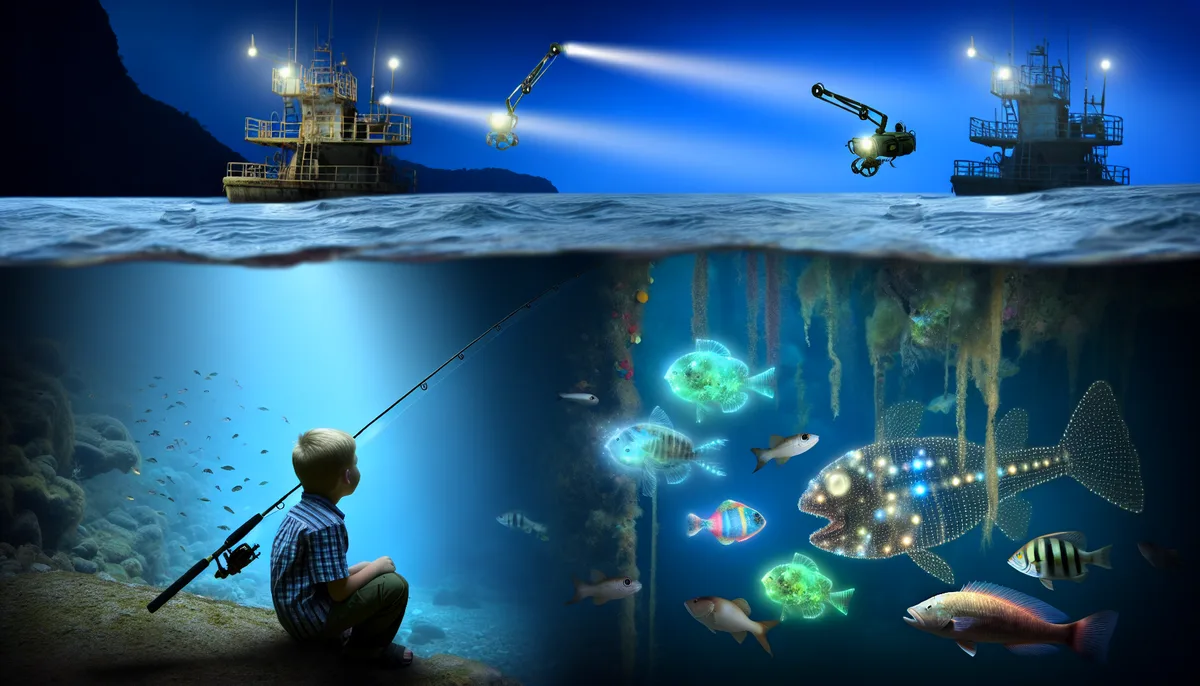
From an early age, my fascination with the natural world, more specifically, aquatic life, has been profound. I found immense allure in the thought that the majority of the Earth’s surface—about 70%—is underwater, much of it unexplored and home to an array of astonishing yet elusive creatures and landscapes. That’s why the topic of deep-sea discoveries is one I find captivating. The deep sea is a frontier of unknowns, holding mysteries that continue to intrigue scientists and enthusiasts alike.
The allure of the deep sea isn’t just about the unknown, but also about the sheer beauty and strangeness of its inhabitants. The more we delve into the depths, the more we realize how little we know about our own planet. Deep-sea discoveries shed light on a hidden world that is as complex and diverse as any tropical rainforest or desert.
The Dramatic Landscape of the Deep Sea
Silent, dark, and highly pressurized—the deep sea is undoubtedly an intimidating place, but it also holds within its silence an enchanting array of odd formations. Underwater volcanic activity, for instance, gives birth to seamounts and hydrothermal vents. Seamounts, which are underwater mountains rising from the ocean floor, create a hotspot of biodiversity.
These seamounts act as oases in the deep, attracting a variety of marine life that thrives in their nutrient-rich environment. Fish, corals, and other organisms flourish here, forming complex ecosystems. The study of these areas has led to numerous deep-sea discoveries, enhancing our understanding of marine biology and ecology.
Hydrothermal Vents and Their Wondrous Lifeforms
At the heart of deep-sea discoveries, hydrothermal vents and their bizarre alien-like creatures astound scientists. Miles away from sunlight that enables life to prosper on Earth’s surface, these organisms tap into the warmth and minerals from the vents to survive. This process, known as chemosynthesis, is truly remarkable and a slap in the face to our biology textbooks that preach photosynthesis as the cornerstone of life.
The creatures found near hydrothermal vents are nothing short of extraordinary. From giant tube worms to ghostly white crabs, these organisms have adapted to one of the most extreme environments on Earth. Their existence challenges our understanding of life’s requirements and opens up the possibility of life in similar conditions elsewhere in the universe.
Unveiling the Unexpected: Remarkable Deep-Sea Discoveries
In this seemingly hostile environment, new species are continually being discovered. Here are just a few examples that expand our understanding of life in the deep sea:
- The Hoff Crab: These crustaceans have baffled scientists with their fur-like setae that detoxify the poisonous chemicals and provide nutrients in the harsh vent environment.
- The Goblin Shark: These Elasmobranch fish have a distinctly creepy appearance with a prominent snout and a jaw that extends while feeding.
- The Dumbo Octopus: Named for its ear-like fins, this astoundingly cute octopus is even more special due to its habitat—it’s the deepest living genus of all known octopuses.
- Atlantic Wolffish: These cold-water dwellers have “anti-freeze” properties, and their blue blood helps them survive frigid depths.
- Vampire Squid: Aside from the captivating name and look, they have the unique ability to turn themselves “inside-out” as a defensive tactic.
To learn more about other fascinating creatures, check out this comprehensive list of deep-sea organisms compiled by the Monterey Bay Aquarium Research Institute.
The reality is, we’re just scratching the surface of deep-sea discoveries. By exploring this relatively untouched vastness, we can expect to uncover countless new species and expand our understanding of deep-sea environments, thus ultimately enhancing our comprehension of life on our planet and possibly beyond.
The Technological Marvels Behind Deep-Sea Discoveries
The advancement in technology has been pivotal in propelling deep-sea discoveries. Submersibles and remotely operated vehicles (ROVs) are the unsung heroes of marine exploration. These machines, often equipped with high-definition cameras and robotic arms, allow scientists to explore and collect samples from the deepest parts of the ocean without human divers enduring the extreme conditions.
One notable technological achievement is the development of autonomous underwater vehicles (AUVs). These robots can be programmed to survey large areas of the ocean floor, mapping terrain and gathering data. The use of AUVs has greatly expanded our capacity to make deep-sea discoveries, providing unprecedented insights into underwater geology and biology.
Innovations in Deep-Sea Exploration
Continuous innovation in deep-sea exploration tools is essential for uncovering new findings. Modern submersibles, for instance, are now capable of diving to greater depths and staying underwater for extended periods. Their advanced sonar systems can detect and map underwater features with incredible precision.
Furthermore, the miniaturization of technology has led to the creation of smaller, more agile ROVs that can navigate through narrow crevices and complex underwater structures. This allows scientists to reach previously inaccessible areas, increasing the potential for groundbreaking deep-sea discoveries.
Implications of Deep-Sea Discoveries on Science and Society
The impact of deep-sea discoveries extends far beyond the realm of marine biology. These findings have profound implications for various scientific fields and society as a whole. For instance, studying organisms that thrive in extreme conditions can lead to advancements in biotechnology and medicine. Enzymes from these creatures might be used in industrial processes or to develop new pharmaceuticals.
Deep-sea discoveries also have potential implications for climate science. By understanding how deep-sea ecosystems respond to changes in temperature and chemistry, scientists can better predict the impacts of climate change on marine environments. This knowledge is crucial for developing strategies to mitigate these effects and protect our oceans.
The Future of Deep-Sea Exploration
As technology continues to advance, the future of deep-sea exploration looks promising. New tools and techniques will allow us to dive deeper, stay longer, and uncover more about this mysterious part of our planet. Collaborative efforts among international scientific communities will be key to maximizing the potential of these deep-sea discoveries.
Moreover, increased public interest and awareness about the deep sea can drive funding and support for marine research. Educational programs and documentaries highlighting the wonders of deep-sea exploration can inspire the next generation of scientists and explorers, ensuring that the quest for knowledge continues.
In Conclusion
For individuals like myself who are deeply drawn to the Earth’s natural marvels, the future of deep-sea discoveries holds overwhelming potential. The more we uncover the mysteries of the deep sea, the more we appreciate the intricate and diverse tapestry of life on Earth. Let’s continue to explore, discover, learn, and marvel at the unexpected wonders that lie beneath the ocean’s surface.
Deep-sea discoveries remind us that there is still so much to learn about our planet. The hidden depths of the ocean are a treasure trove of information and inspiration, waiting to be unlocked by curious minds and innovative technologies. As we push the boundaries of exploration, we open new chapters in the story of Earth’s natural history, revealing the beauty and complexity of life beneath the waves.